Prerequisites

  • A Bindbee account. Access is provisioned during onboarding. If you don’t have access, email Bindbee Support.
  • Your Development API key from Bindbee Dashboard.
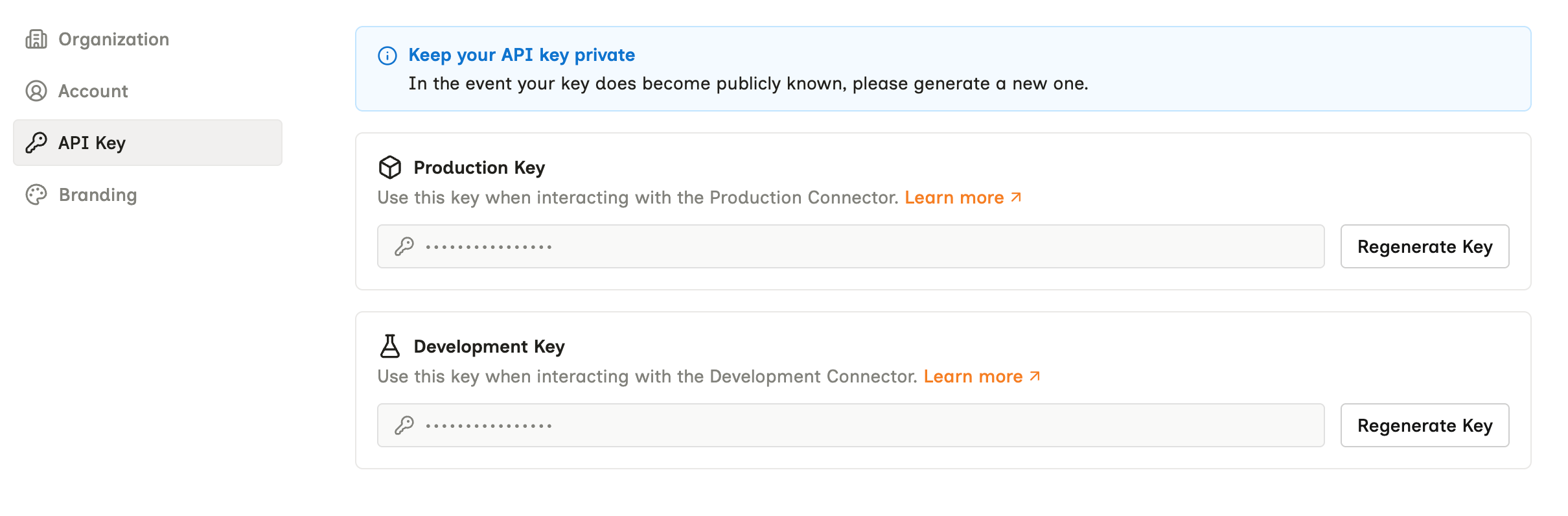
The API Key settings page, showing a Production Key block and a Development Key block, each with a masked value and a Regenerate Key button

Settings → API Key. Production and Development are separate keys, and neither works against the other's connectors.


Steps

1

Open the Development tab

Go to app.bindbee.dev, open Connectors, and switch to the Development tab.
The Connectors page on the Development tab, noting that development connectors do not sync automatically, with a Test Connector button

Connectors → Development. The notice here is about recurring syncs - the first one still runs on its own.

Result: You are on the tab test connectors are created from.
2

Create a test connector

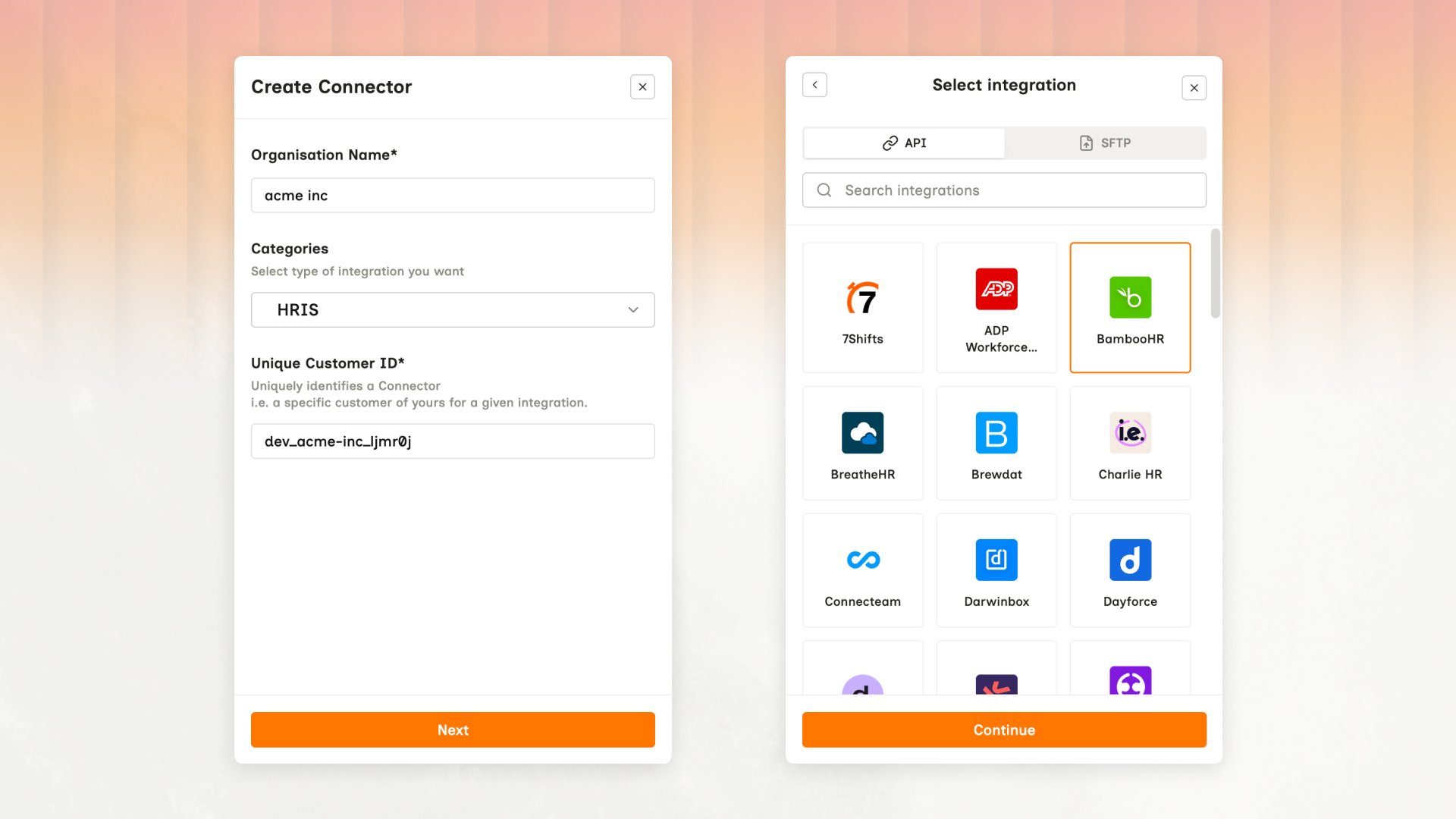
Press + Test Connector, then pick a category and an integration - for example BambooHR under HRIS.
The Create Connector form with an Organisation Name field, a Categories dropdown set to HRIS and a Unique Customer ID field, beside the Select integration panel with API and SFTP tabs and BambooHR selected from the integration grid

Create Connector → Select integration. The Unique Customer ID is the origin_id you'll use to match this connector back to your own customer record.

Result: The form carries the Unique Customer ID that maps this connector back to your own customer record.
3

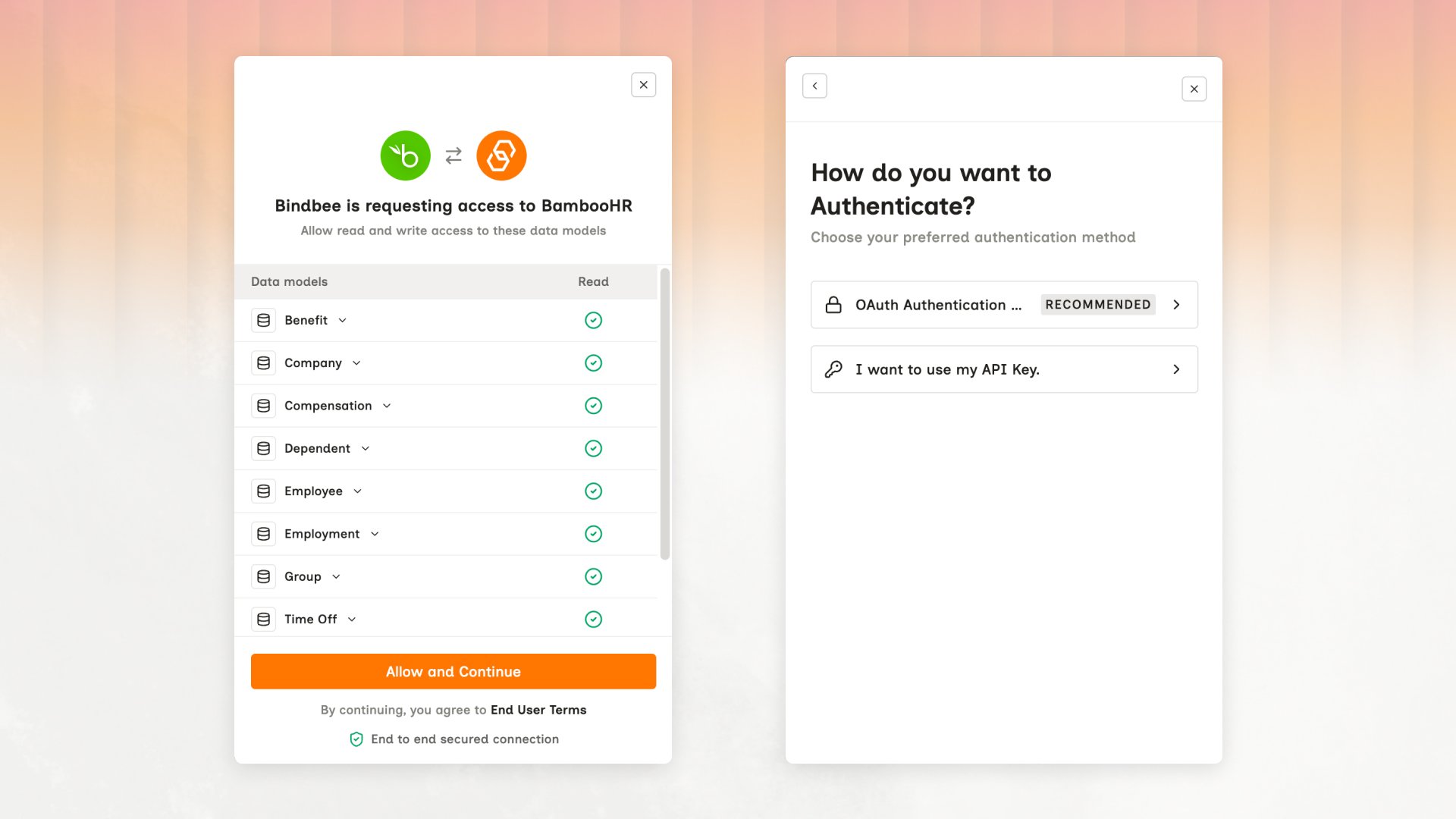
Authorize the connection

Follow the prompts to complete authorization.
A consent screen reading 'Bindbee is requesting access to BambooHR', listing data models including Benefit, Company, Compensation, Employee, Employment and Time Off with read access ticked and an Allow and Continue button, beside a 'How do you want to Authenticate?' panel offering OAuth Authentication marked Recommended or using your own API key

The authorization screens your customer sees. Access is granted per data model, and which methods are offered depends on the integration.

It depends on the integration you pick. Some work with a demo account. Others need a real one - for BambooHR, a free trial account works.
Result: The connector exists, and its initial sync has started.
4

Copy the connector token

Open the connector and copy the connector_token from the Overview tab.Result: You have the token that tells Bindbee whose data to return.
5

Wait for the first sync

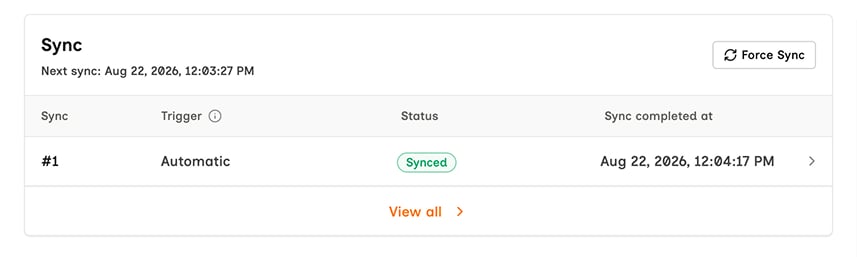
The initial sync is a full read of every model in scope. It usually finishes in a couple of minutes.On the same Overview tab, watch the Sync panel until the run’s Status reads Synced.
The Sync panel on a connector, listing sync #1 with trigger Automatic, status Synced, and the time it completed, alongside a Force Sync button

The connector's Sync panel. Wait for Status to read Synced before calling the API; Force Sync triggers the next run.

In Development, only the first sync runs on its own. After that, press Force Sync or call Force sync a connector to get fresh data.
Result: The run reads Synced, and the connector’s data is ready to query.
6

Make your first API call

Send a GET request to the Employees endpoint:
Every field the response can carry, with a sample payload, is on Get Employees.Result: A 200 carrying employees, normalized out of that system.

What just happened

  1. You created a connector - one authorized connection to one source system.
  2. You synced it, pulling that system’s data into Bindbee.
  3. You called the Unified API with your API key and the connector token, and got normalized data.
In production two things change: connectors sync on a schedule rather than on manual trigger, and your end users create them through Magic Link or Embedded SDK rather than you entering credentials. See How to connect.

Platform

Magic Link, Connectors, Logs, Custom Fields, Webhooks and the Changelog - where each lives.

API basics

Authentication, pagination, rate limits and sync frequency.

Choose what to sync

Narrow the models and fields Bindbee requests from every system.

Get notified on change

Subscribe to a webhook so your application stops polling.